2026-09-22 · Derek Holloway
Polybutylene and Galvanized Pipe Problems in Older Texas Homes
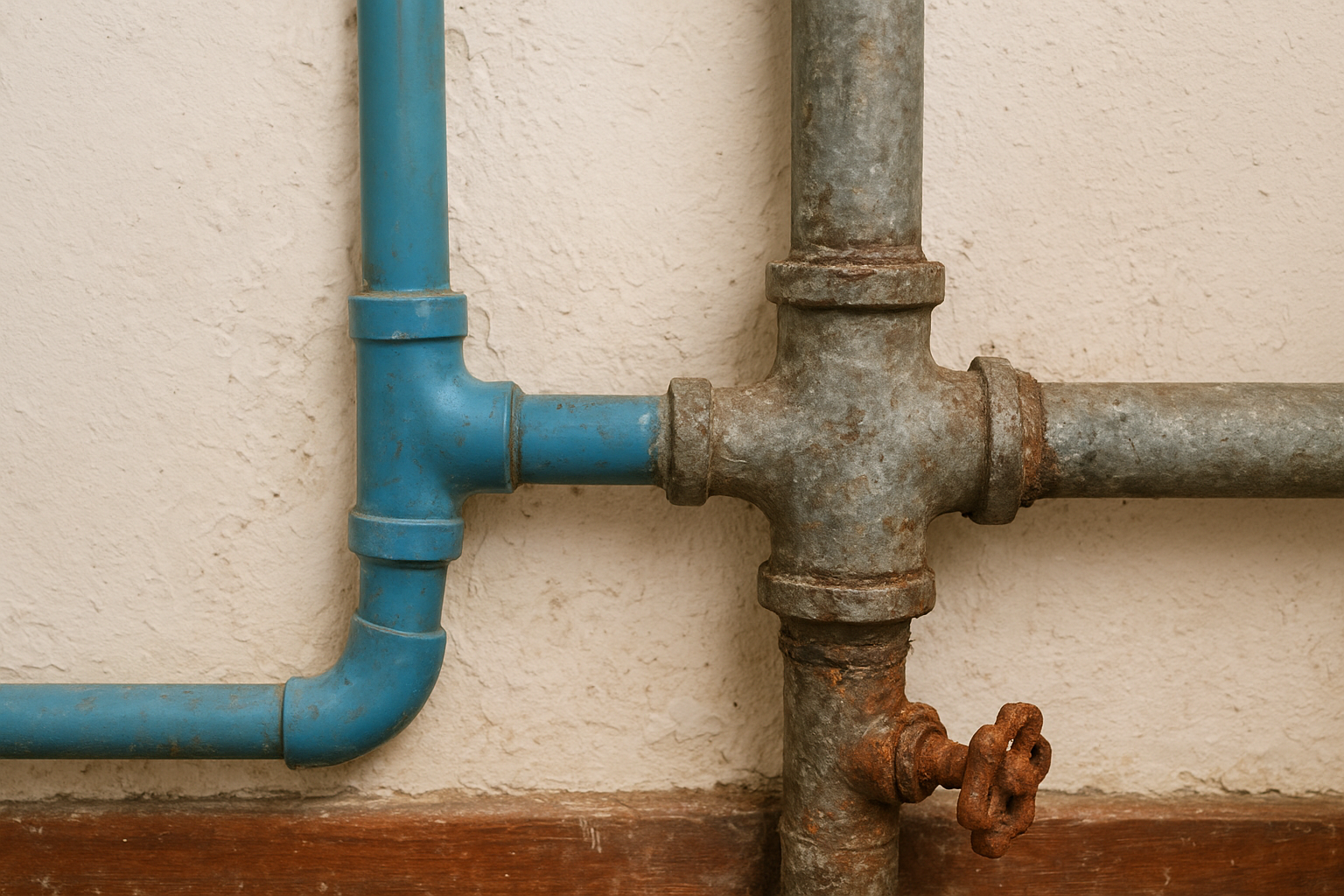
Polybutylene pipes installed from the late 1970s through the mid-1990s and galvanized steel lines from the 1950s to 1970s commonly fail in Houston homes built before 1990, leading to pinhole leaks and reduced water flow within 20 to 30 years of service. These materials react poorly to the city's water chemistry and constant moisture exposure, causing homeowners in Montrose, Midtown, and Downtown to deal with sudden bursts behind walls or under slabs.
Recognizing Polybutylene Failures in Houston Homes
Polybutylene piping appears gray or black and connects with plastic or copper fittings that often crack at the joints. In Harris County homes, these lines typically run through attics or crawl spaces where summer heat above 90 degrees speeds up oxidation and brittleness. Homeowners notice reduced pressure at fixtures or damp ceilings first, especially in River Oaks properties where original plumbing remains untouched. The subtropical humidity keeps soil saturated year-round, so any underground polybutylene segment expands and contracts daily, creating hairline fractures that worsen during heavy rains. Replacement becomes necessary once multiple leaks appear within a 12-month span, as patching only delays the inevitable across entire runs.
Galvanized Pipe Corrosion Patterns
Galvanized steel pipes develop interior rust that flakes off and restricts flow, often dropping pressure to a trickle in second-floor bathrooms of Heights bungalows. The zinc coating erodes after 25 to 40 years in Houston's slightly acidic water supply, leaving bare steel that corrodes rapidly. In Midtown and Downtown buildings from the 1960s, these lines frequently run under concrete slabs where shifting clay soil cracks the pipe exterior and allows groundwater intrusion. Residents report brown water or metallic taste during the first cold snap of winter when temperature swings stress the remaining metal. Full replacement avoids repeated slab access that disrupts landscaping in established neighborhoods.
Climate and Soil Effects on Pipe Lifespan
Houston's hot humid summers push attic temperatures past 110 degrees, softening polybutylene and accelerating joint failures in homes near the Houston Zoo or Museum of Fine Arts. Mild winters prevent deep ground freezes but allow constant moisture cycling that rusts galvanized lines faster than in drier Texas regions. Clay-heavy soils in Pearland and Sugar Land expand when wet, exerting pressure on underground pipes that older Montrose foundations cannot absorb. Katy homes on the western edge see similar movement during tropical storms, pushing water into any existing pinholes. These conditions shorten expected service life by 5 to 10 years compared to national averages.
Replacement Options for Local Housing Stock
Whole-house repipe work in older Houston properties often routes new lines through attics to avoid slab demolition common in River Oaks estates. PEX tubing resists the local water chemistry better than the original materials and installs with fewer joints. Copper remains an option for visible runs in Heights homes where owners prefer traditional aesthetics. Service pages detail the differences between polybutylene pipe replacement and galvanized pipe replacement for properties built in the 1960s through 1980s. Slab leak repipe techniques become relevant when lines sit beneath 4-inch concrete in Downtown high-rises converted to residential use.
Planning the Job Around Neighborhood Realities
Work in dense blocks like Montrose requires careful coordination with narrow streets and mature trees that limit equipment access. Crews often stage materials in driveways of Midtown townhomes to minimize disruption during the 3- to 5-day process. Homeowners in nearby Sugar Land and Pearland benefit from the same material upgrades but face fewer permitting hurdles outside city limits. Checking for polybutylene or galvanized during pre-purchase inspections prevents surprises in 1970s-era Heights cottages. Related reading on signs your Texas home needs a repipe helps prioritize repairs before leaks reach drywall or flooring.