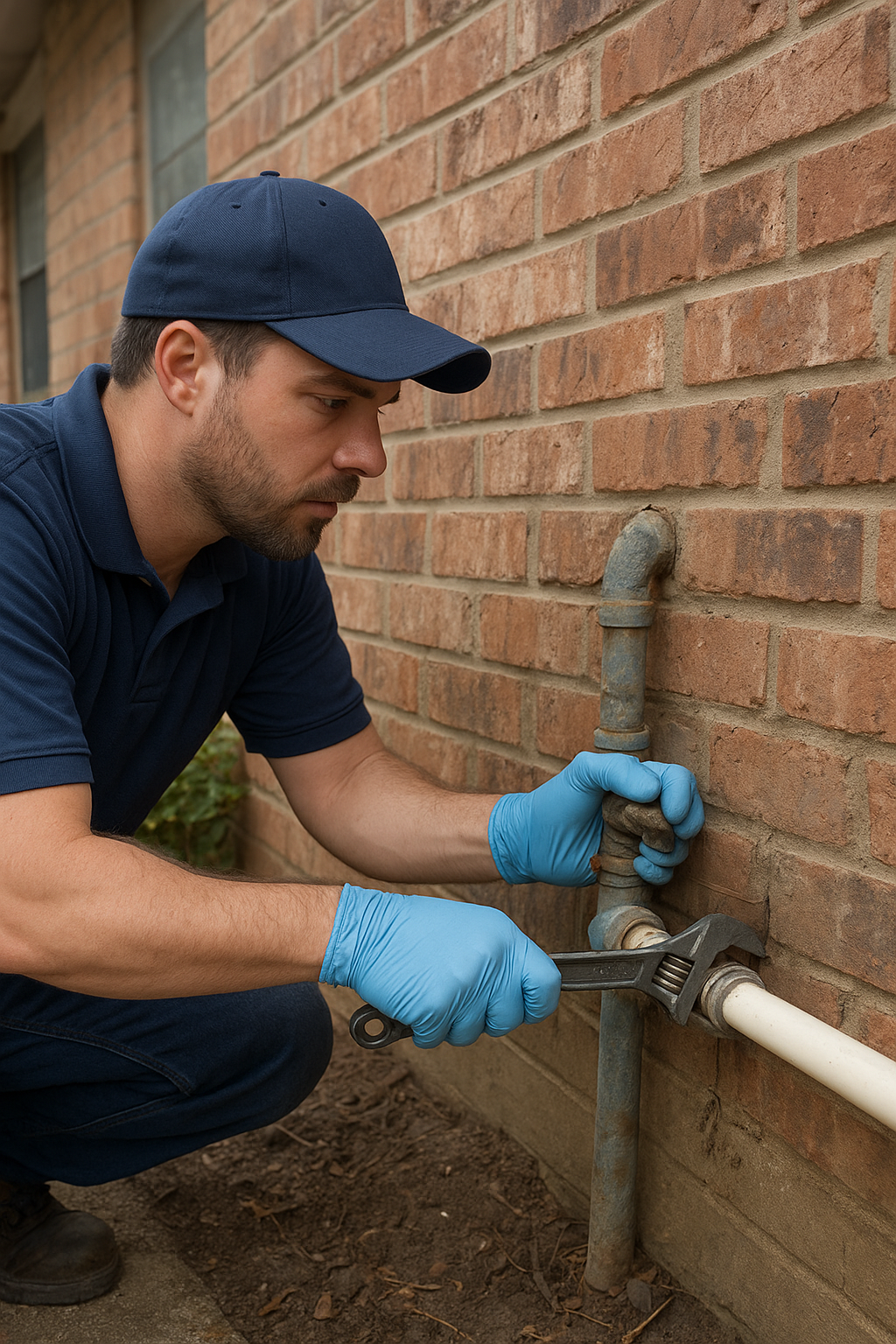
Polybutylene piping installed widely in Houston neighborhoods like the Heights and Montrose before 1995 often fails at joints when exposed to the city's chlorinated water supply. Hot humid summers accelerate degradation while mild winters keep soil moisture high around slab foundations, making leaks harder to trace without excavation. Replacement typically involves rerouting lines through attics or exterior walls to avoid disturbing mature live oaks common in River Oaks and Midtown properties.
Homeowners in Katy, Sugar Land and Pearland face similar issues in 1980s tract homes where polybutylene runs beneath slabs. Access requires cutting through tile or hardwood floors, then pressure-testing new lines before drywall repair. Local building practices favor PEX or copper for the switch because both handle Houston's occasional hard water spikes better than the original material.
Edge cases include multi-story homes in Downtown where vertical stacks share chases with electrical and HVAC, requiring coordination to maintain code clearances. Slab leaks in older Midtown duplexes often mean partial foundation tunneling rather than full removal. Crews always isolate the water meter at the street before starting to prevent backflow into adjacent properties during the switchover.
Technician insight
In Houston, the thing that catches most people out with polybutylene pipe replacement is how the clay-heavy soil in Harris County holds moisture against slab lines year-round, turning small joint leaks into widespread floor damage before anyone notices. Homes in the Heights and Montrose from the 1980s often have polybutylene running right under HVAC returns, so we have to reroute carefully to keep airflow balanced after the job.
Montrose Bungalow Slab Leak
Polybutylene lines under the 1984 slab began leaking near the kitchen. We located the failure with moisture meters, isolated the section, and ran new PEX through the attic to avoid further slab work. The system tested clean and the homeowner regained full pressure without opening the entire floor.
Polybutylene Pipe Replacement Services We Offer
✓Whole Home Polybutylene Repipe
Complete removal of polybutylene throughout the house with new PEX lines run through accessible routes in attics and walls.
✓Slab Leak Polybutylene Repair
Targeted excavation and replacement of polybutylene under concrete slabs common in Heights and Montrose homes.
✓Attic Polybutylene Replacement
Rerouting failing polybutylene lines from hot attics where Houston summer heat speeds joint failure.
✓Polybutylene to Pex Conversion
Direct swap from polybutylene to PEX tubing while preserving existing fixture locations in older Harris County homes.
✓Kitchen and Bath Polybutylene Repipe
Focused replacement of supply lines serving kitchens and bathrooms in River Oaks and Midtown properties.
Polybutylene Pipe Replacement Cost in Houston, TX
| Service | Typical Range | What Affects It |
|---|---|---|
| Whole-house polybutylene repipe | $4500–$9500 | Higher in two-story Heights homes with limited attic access |
| Slab leak section replacement | $1800–$4200 | Depends on depth and concrete thickness in Montrose properties |
| Attic-only repipe | $2800–$5200 | Common in single-story River Oaks homes |
| Kitchen and bath supply swap | $1200–$2400 | Limited to fixture groups in Midtown duplexes |
Ranges are typical for Houston, TX and confirmed with an exact written quote before any work starts.
How it works
- 1
Site Assessment
Inspect all accessible polybutylene runs, test water pressure, and map routes through attics or exterior walls.
- 2
Isolation And Planning
Shut off main water at the meter, plan new line paths that avoid electrical and HVAC in Houston's tight older homes.
- 3
Removal And Installation
Cut out polybutylene sections and install new PEX or copper lines, securing them to joists per local standards.
- 4
Testing And Restoration
Pressure test the new system, restore drywall and flooring, then verify flow at every fixture.
Pricing
Pricing varies with home size, number of stories, and whether slab access is required.