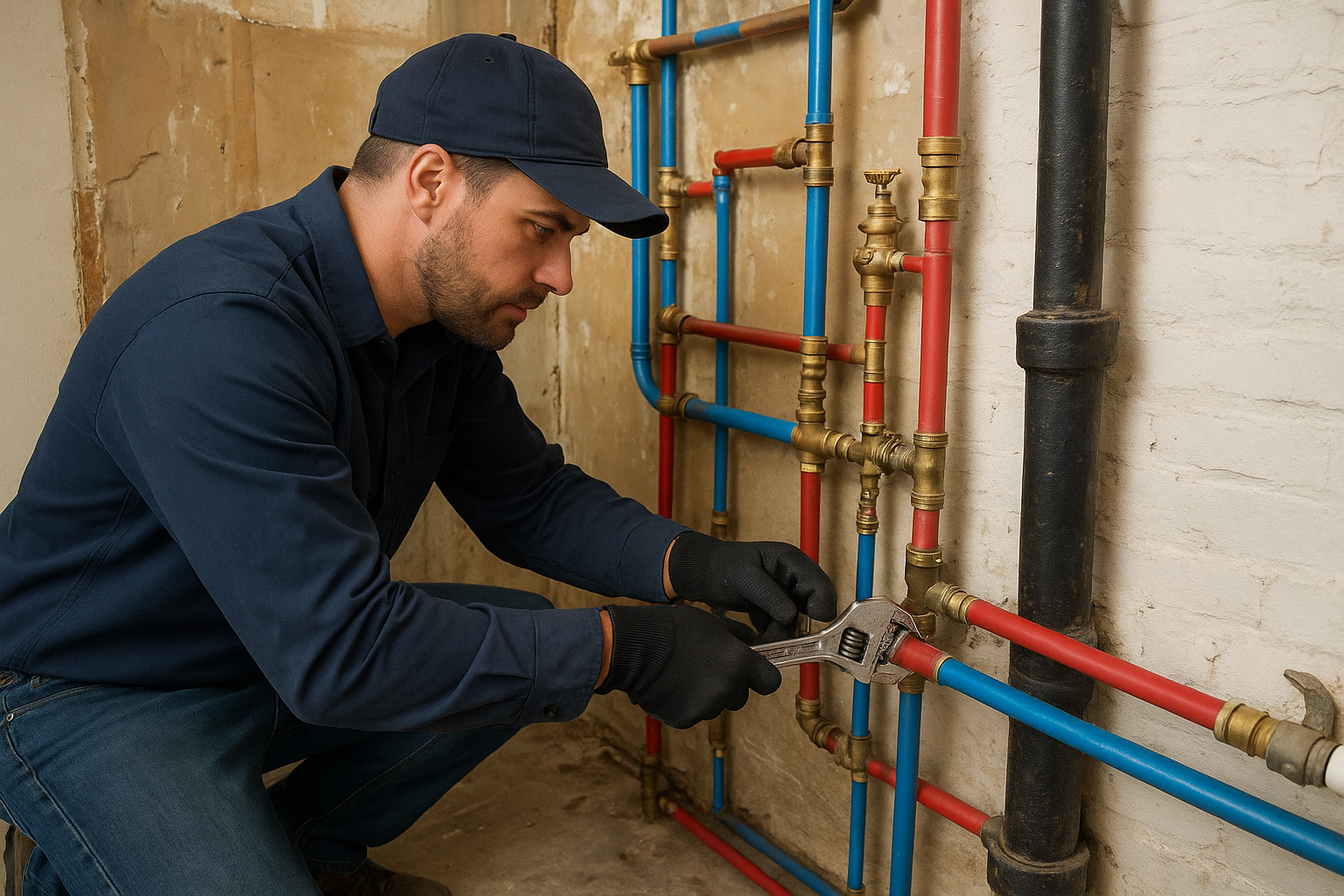
Houston's older homes in the Heights and Montrose often contain galvanized steel lines installed before the 1970s that corrode faster under the area's subtropical humidity and occasional hard water spikes from the municipal supply. These pipes develop pinhole leaks and reduced flow that become noticeable during the long humid summers when condensation accelerates exterior rust. Repiping crews must navigate tight crawl spaces and balloon-framed walls common in these neighborhoods while coordinating with Harris County permitting rules that require pressure testing before drywall restoration.
River Oaks and Midtown properties frequently feature mixed copper and polybutylene runs from the 1980s building boom, where ground movement from expansive clay soils stresses joints. Whole-house repipe work here typically involves running new PEX through existing chase routes to minimize disruption to mature landscaping and historic finishes. Crews also account for the mild winters that rarely freeze but still allow thermal expansion issues in long attic runs exposed to attic heat.
Downtown high-rises and nearby townhomes present different access challenges with stacked plumbing cores and limited working hours due to building rules. Repipe crews select materials that meet local water pressure demands while avoiding future issues from the region's occasional tropical storm flooding that can affect lower-level valves and shutoffs.
Nearby cities such as Katy, Sugar Land and Pearland share similar clay soils and humidity patterns, so the same material choices and permitting awareness apply when extending services outside the city core.
Technician insight
In Houston the thing that catches most people out with whole-house repipe is how quickly humidity and clay soil movement crack old galvanized joints in pre-1970 Heights homes, turning a small leak into full wall replacement if the job is delayed past the first summer after signs appear.
Montrose Bungalow Repipe
Homeowners noticed frequent pinhole leaks and brown water in a 1960s Montrose bungalow. Inspection revealed heavily corroded galvanized lines throughout the crawl space. Crews replaced the system with PEX routed along existing paths and restored insulation. Water pressure returned to normal and no further leaks occurred during the following humid season.
Whole-House Repipe Services We Offer
✓PEX Repiping in Houston
Replaces aging galvanized and polybutylene lines with flexible PEX tubing suited to Houston's humid climate and tight wall cavities in Heights and Montrose homes.
✓Copper Repiping for Historic Homes
Installs new copper lines in River Oaks and older Montrose properties where owners prefer traditional materials that match original construction details.
✓Galvanized Pipe Replacement
Removes corroded galvanized steel common in pre-1970 Heights and Midtown houses and upgrades to modern materials that resist the area's moisture-driven rust.
✓Whole House Repipe in Multi-Story Homes
Handles vertical runs and stacked plumbing in Downtown and Midtown townhomes while preserving finishes and working around limited access hours.
✓Attic and Crawl Space Repipe
Routes new lines through Houston attics and crawl spaces accounting for high summer heat and occasional moisture that affects insulation and pipe supports.
Whole-House Repipe Cost in Houston, TX
| Service | Typical Range | What Affects It |
|---|---|---|
| Average single-story Heights or Montrose home | $6,500–$11,000 | Depends on square footage and extent of wall access needed |
| Two-story River Oaks or Midtown home | $9,000–$15,000 | Higher due to vertical runs and finish protection |
| PEX versus copper material upgrade | $1,500–$3,500 | Copper increases cost in historic properties |
| Crawl space or attic access work | $800–$2,000 | Varies with insulation condition and clearance |
Ranges are typical for Houston, TX and confirmed with an exact written quote before any work starts.
How it works
- 1
Site Evaluation
Technicians inspect existing piping, note access points, and check water pressure in homes across Harris County neighborhoods.
- 2
Material and Route Planning
Select PEX or copper based on home age and soil conditions, then map chase routes that minimize drywall removal in older Heights and Montrose construction.
- 3
Old Pipe Removal
Cut out and extract galvanized or polybutylene lines while protecting floors and landscaping typical of River Oaks and Midtown properties.
- 4
New Line Installation and Testing
Run new piping, connect fixtures, and perform pressure tests required by local codes before restoring walls and insulation.
- 5
Final Walkthrough
Verify flow and pressure at every fixture and review shutoff locations with the homeowner.
Pricing
Pricing varies by home size, number of stories, and pipe material choice in older Houston stock.