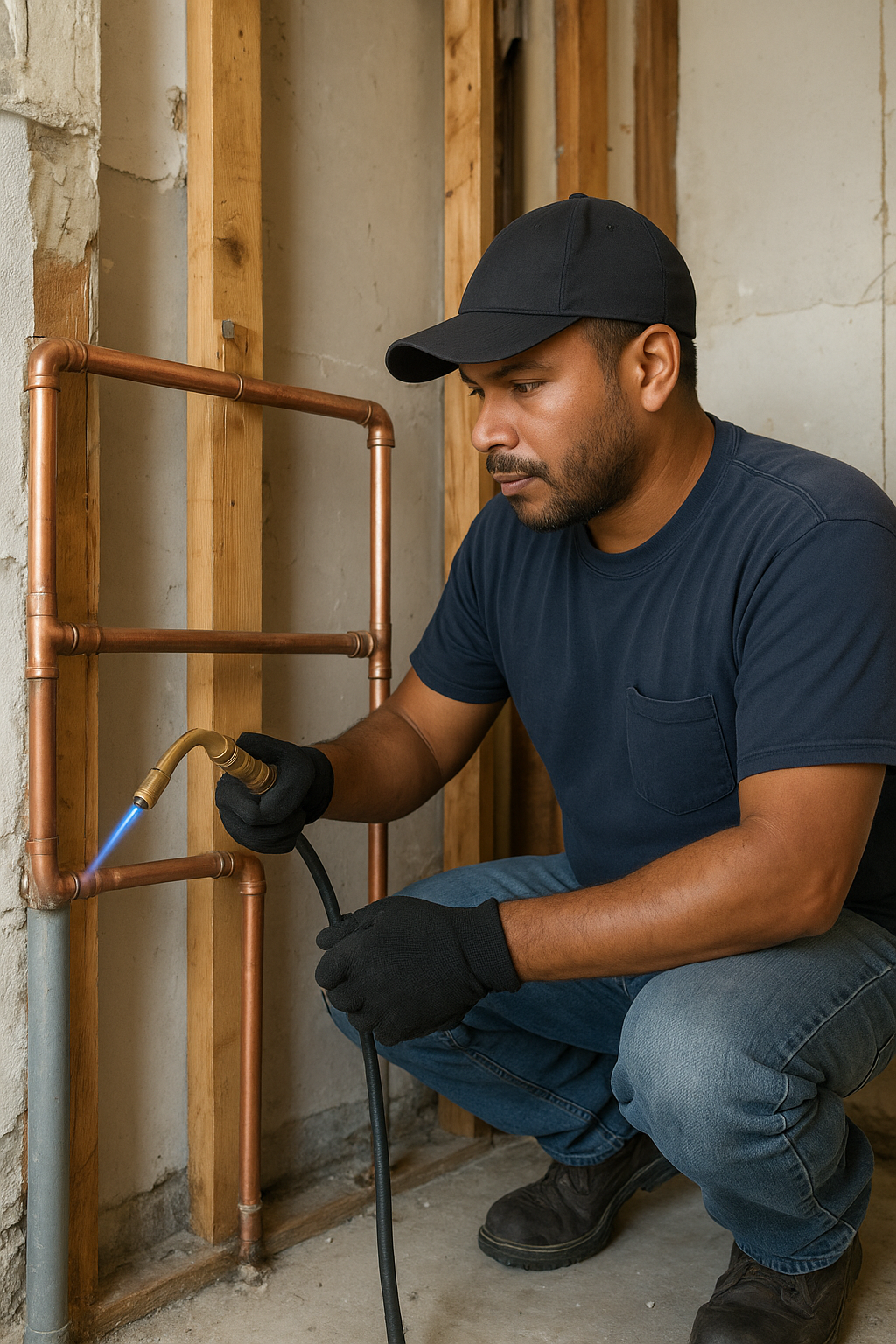
Conroe homes built from the 1960s through the 1990s often still carry original galvanized or polybutylene supply lines. Texas Repipe replaces these systems in single-story ranches off Highway 105 and two-story houses near the lake without tearing up finished interiors where possible. Hot humid summers speed corrosion while mild winters keep soil movement moderate, so crews plan trenchless or limited-access routes through crawl spaces and garages common in this area.
Access matters on lots that back up to Lake Conroe or sit inside W.G. Jones State Forest boundaries. Trucks stage on wide driveways along South Loop 336 or near Conroe High School rather than narrow lakefront roads. The team coordinates with local water districts to keep pressure restored the same day and leaves yards graded for the heavy rains that hit Montgomery County each spring.
Nearby neighborhoods such as April Sound and Walden also see frequent repipes when owners notice low flow or discolored water. Texas Repipe schedules around school traffic on FM 2854 and uses compact equipment suited to the clay-heavy soils found here.
Around Conroe
We regularly work near:
- 📍Lake Conroe
- 📍Heritage Museum of Montgomery County
- 📍Conroe High School
- 📍W.G. Jones State Forest
- 📍South Loop 336
Repipe in Conroe — Local Notes
- •Many Conroe lots near Lake Conroe sit on clay that expands after summer rains, so crews sleeve new PEX lines to prevent future movement stress.
- •Homes off Highway 105 often have garages or utility rooms set back from the street, requiring longer supply runs and careful planning to avoid septic fields common in unincorporated pockets.
- •Older sections near downtown Conroe still have narrow easements; the crew stages materials on the street and hand-carries pipe to limit lawn damage during humid summer work.
- •Lake-area properties experience higher humidity inside walls, so new copper or PEX is installed with extra insulation sleeves to reduce condensation.